CiteWorth logo

How CiteWorth works

Understand what AI sees.Know what matters.Turn evidence into action.

CiteWorth brings AI visibility together with the site evidence underneath it and the context of your business, then works out what is worth doing, supports the work itself, and verifies what changed afterwards.

No card required.

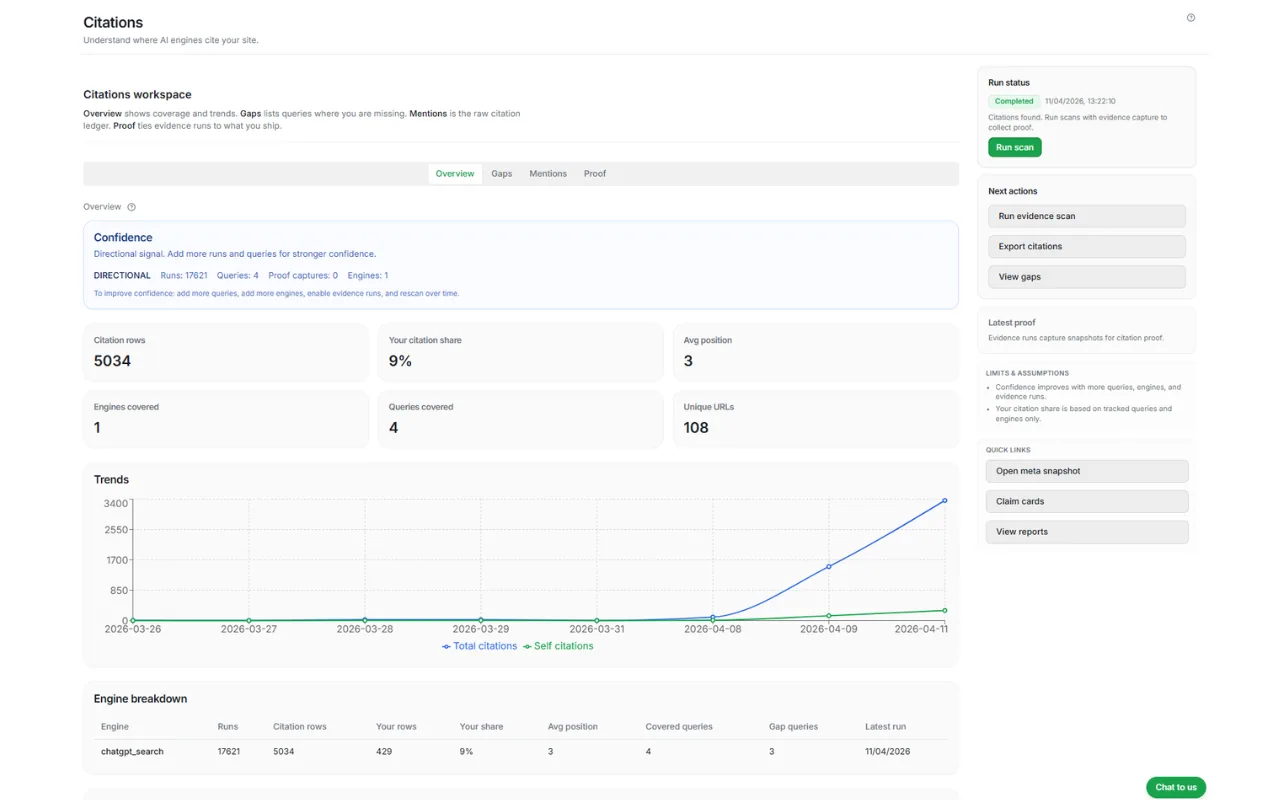
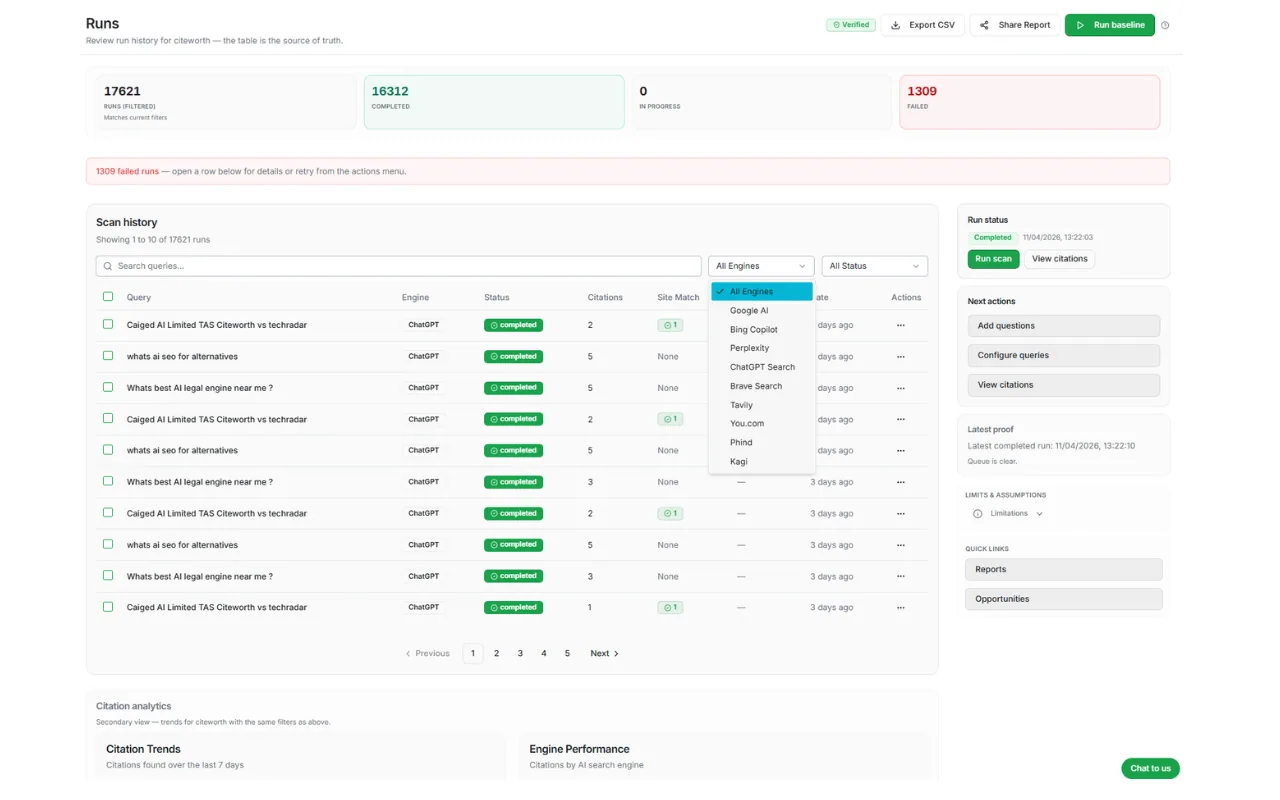
Citations Evidence captured per run
CiteWorth Citations workspace showing citation coverage, engine breakdown and a trend chart for tracked Prompts.

What CiteWorth brings together

One operating picture instead of separate tools that never meet.

AI evidence

What answer engines cite, miss or attribute elsewhere.

Site evidence

What can be fetched, rendered, understood and trusted.

Business context

What your organisation actually does and cares about.

The operating journey Prioritised opportunitiesControlled workVerificationReporting

The operating journey

From what is happening to what you can show for it.

CiteWorth’s official lifecycle is UNDERSTAND → PRIORITISE → EXECUTE → PROVE. The product journey below is how that loop shows up in the work — each stage produces something the next can use, and every stage leaves evidence behind.

01 / Evidence

CiteWorth is not only an AI citation tracker.

It observes what AI systems are showing about you, and the site evidence that can shape whether you are discoverable, understandable and trustworthy in the first place. Both sides are captured per run, with timestamps, so you are comparing evidence rather than impressions.

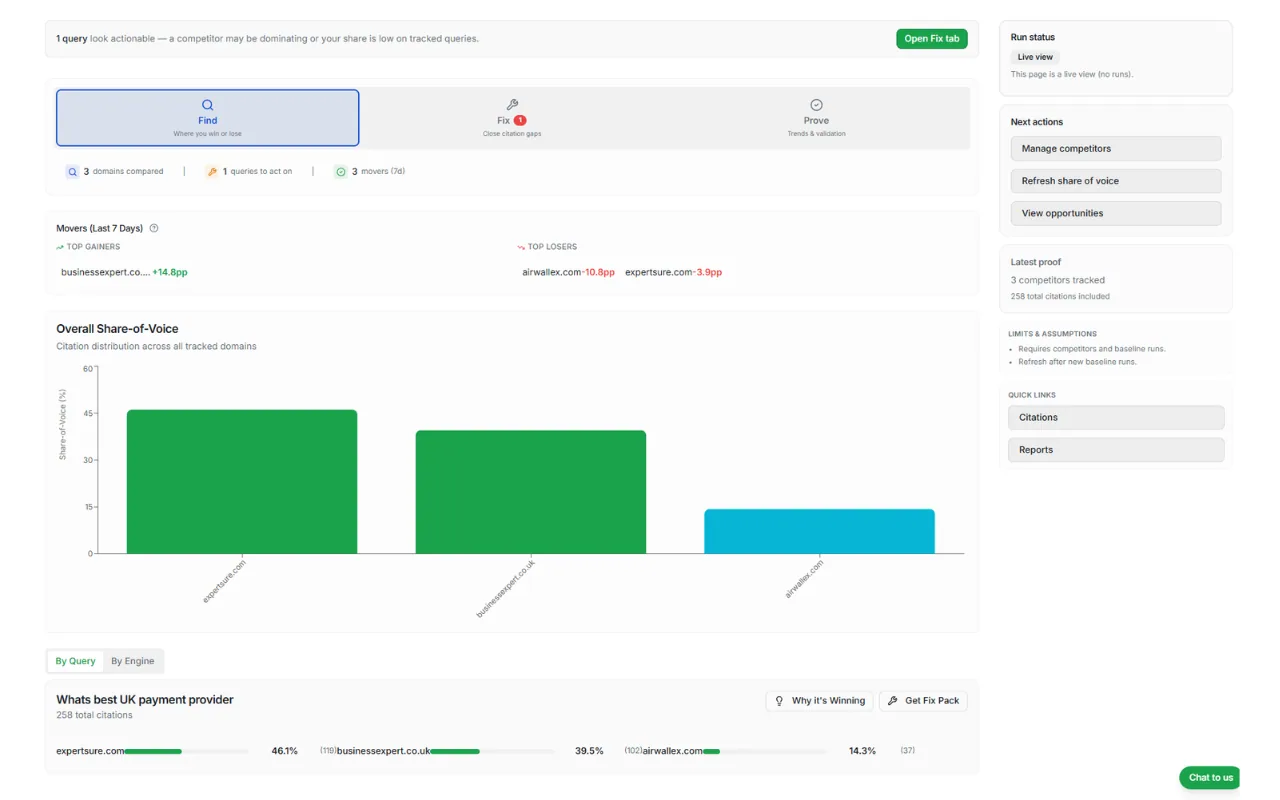
Share of Voice Per-Prompt citation share
CiteWorth Share of Voice screen ranking tracked domains by citation share for each monitored Prompt.

AI evidence

What answer engines surface, who they choose, and how that moves.

  • Citations

    Where you are cited for the Prompts you track, and where you are not.

  • Share of Voice

    How your citation share compares with the domains you track against.

  • Competitors

    Who is selected when you are not, and how consistently.

  • AI Health

    Conditions that affect whether your pages can be used in an answer at all.

Site evidence

What crawlers and answer engines can reach, read, render and rely on.

  • Meta Snapshot

    What is actually served and parsed for a URL.

  • Technical Audit

    Technical conditions that can hold a page back.

  • Crawl and access

    What is reachable, and what is being blocked or missed.

  • Security Posture

    Trust and consent signals observed on the site.

  • PageSpeed

    Performance evidence per URL.

  • Internal Links

    Whether the right page can be found from the rest of the site.

Meta Snapshot Fetch, render and structure
CiteWorth Meta Snapshot scan results showing fetch and render checks, structured data and indexability signals.

CiteWorth shows what was observed and when. It does not claim that any single signal determines how an answer engine behaves.

Explore the evidence tools
02 / Opportunity

Raw results are not the destination.

The useful question is not “what happened?” but “what is worth doing?” Opportunities are where CiteWorth reads across evidence and surfaces the patterns that justify attention.

Patterns worth surfacing

  • Your brand is repeatedly absent for Prompts that clearly relate to you
  • The same competitors are selected instead, across runs
  • A recurring source or domain keeps winning the answer
  • A claim your business relies on has no strong supporting content
  • A technical condition is blocking a page that should be working
  • Trust, consent or access evidence is undermining an otherwise good page
  • A pattern persists across runs rather than appearing once

Not every result becomes an Opportunity. The point of the queue is to be shorter than the evidence behind it.

See Opportunities
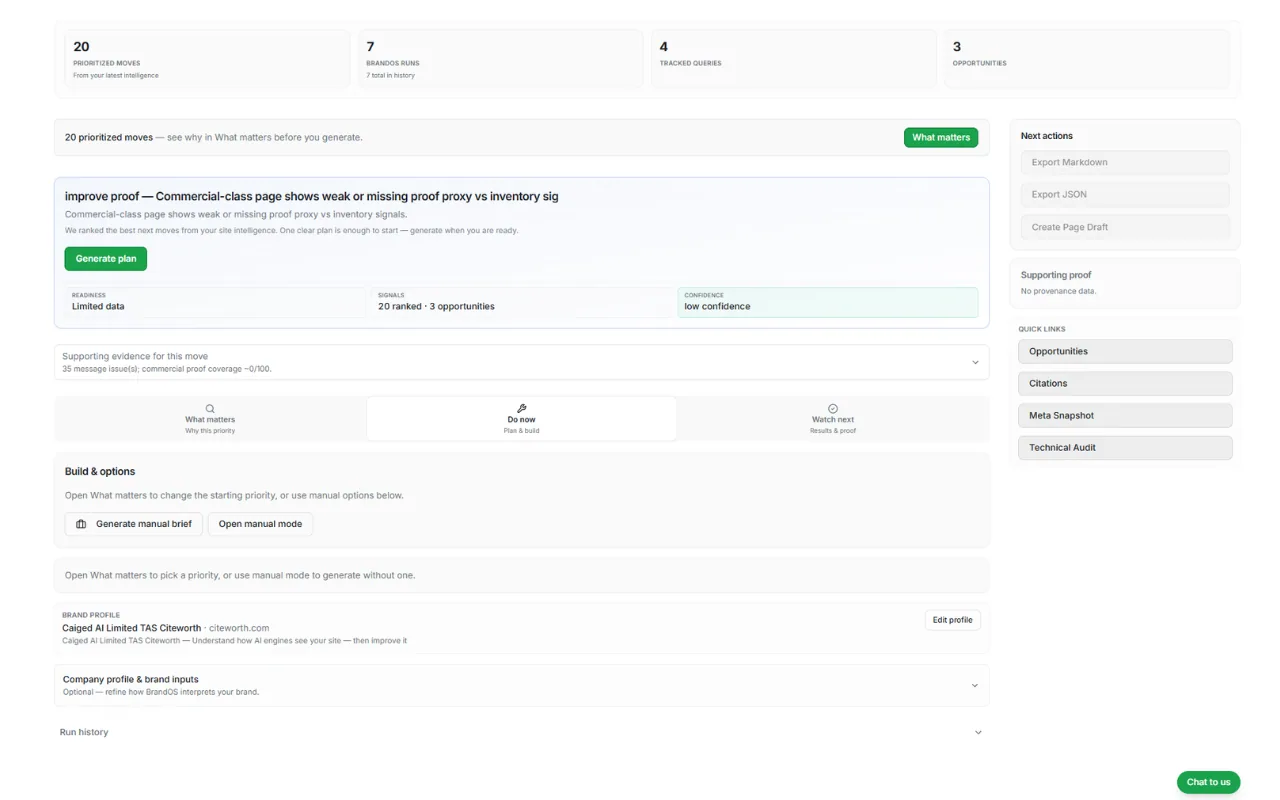
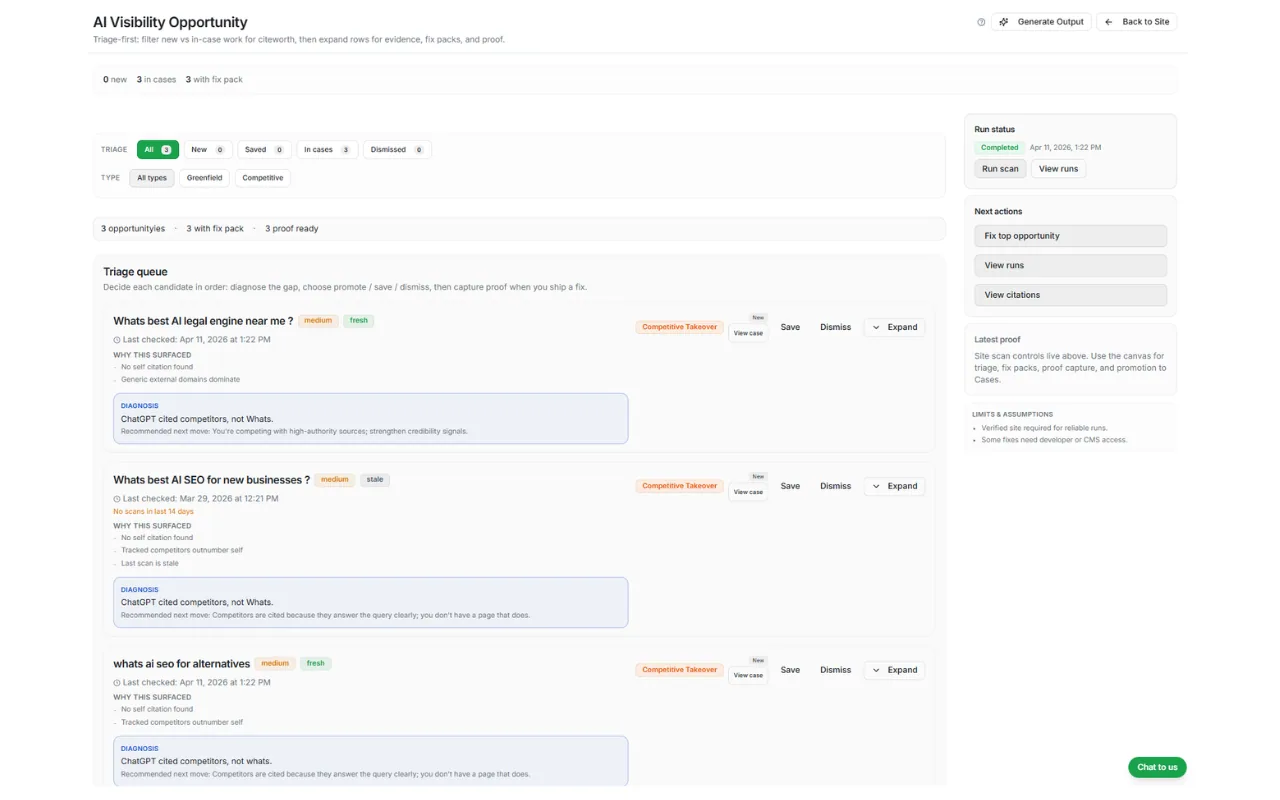
Opportunities Triage queue
CiteWorth Opportunities triage queue with candidate Prompts, why each surfaced, and promote, save or dismiss actions.

The intelligence layer

Context and conversation, running across the whole journey.

Two things sit alongside the stages rather than inside any one of them. They are what stop CiteWorth from treating every run as if it were the first.

Evidence Opportunity Work Fix or create Implement Verify Report

Intelligence Library

Persistent context about your business.

Your organisation, what it does, who it serves and the knowledge your team adds over time. Because that context persists, CiteWorth can interpret new evidence against a consistent understanding of the business instead of starting cold.

  • Business and customer context you can add to and correct
  • Knowledge that carries across runs and workflows
  • Reduces context drift between one piece of work and the next

The Library is context you own and shape. It is not a scan, an audit or a crawl of your systems.
Operator

The intelligence interface to CiteWorth.

Operator is how you interrogate CiteWorth conversationally — across appropriate evidence, intelligence, opportunities, work and reporting — rather than opening each surface separately and reconciling them yourself.

  • Ask across evidence, opportunities, work and reports
  • Grounded in CiteWorth intelligence and your Library context
  • Helps you decide and direct, rather than replacing your judgement

Operator is not a support bot, and it is not a rename of Fix Assist or Content Studio. It also does not make changes to your own systems on its own.

03 / Work

The evidence decides where the work goes.

CiteWorth does not push every finding through the same workflow. An Opportunity carries the context needed to route it, and different kinds of problem need genuinely different responses.

Entry point

A promoted Opportunity

Diagnosed, prioritised, and carrying the evidence that justified it.

One Opportunity does not travel through every module. It goes where it belongs.

04 / Fix or create

Two different jobs, kept distinct.

Remediating a technical condition and producing governed content are not the same activity, and CiteWorth does not blur them.

Remediate

Fix the condition

Technical, crawl, metadata and performance findings become concrete actions with the evidence that raised them attached, so whoever implements it knows exactly what and why.

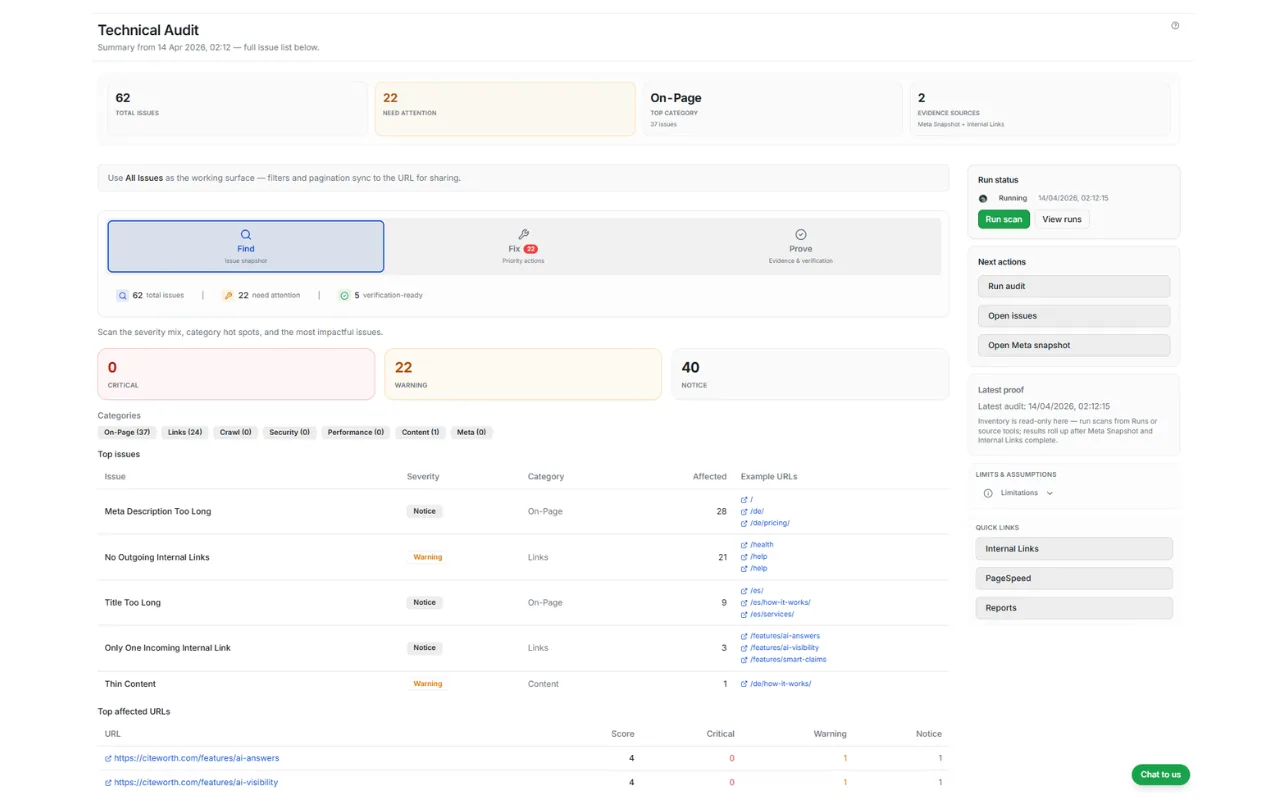
Technical Audit Findings and guidance
CiteWorth Technical Audit findings grouped by severity and category with affected URLs and fix guidance.

Create

Produce what is missing

Where the gap is content or assertion rather than configuration, Content Studio and Claim Cards let you create from CiteWorth evidence and your Intelligence Library context instead of an empty brief.

Content Studio Create from evidence
CiteWorth Content Studio workspace showing evidence-backed priorities and generated output options.
05 / Implement

CiteWorth defines and guides the work. You stay in control of your systems.

This is where a lot of tools overclaim. CiteWorth is deliberately clear about the boundary.

CiteWorth does

  • Define what needs to change and why, with the evidence attached
  • Structure it into work with an owner and a clear outcome
  • Guide implementation with specific, reviewable actions
  • Keep the record of what was proposed and accepted

Stays with you

  • Publishing changes in your CMS, codebase or client systems
  • Approval, review and release process
  • Anything your governance requires a person to sign off

Where implementation happens outside CiteWorth, CiteWorth picks the thread back up at verification.

06 / Verify

Verification is what makes the rest of it defensible.

Once something is live, CiteWorth checks the change is actually in place, re-runs the relevant evidence, and keeps observing afterwards — so you can compare states rather than argue from memory.

Confirm the change Re-run site evidence Observe AI evidence Compare and retain
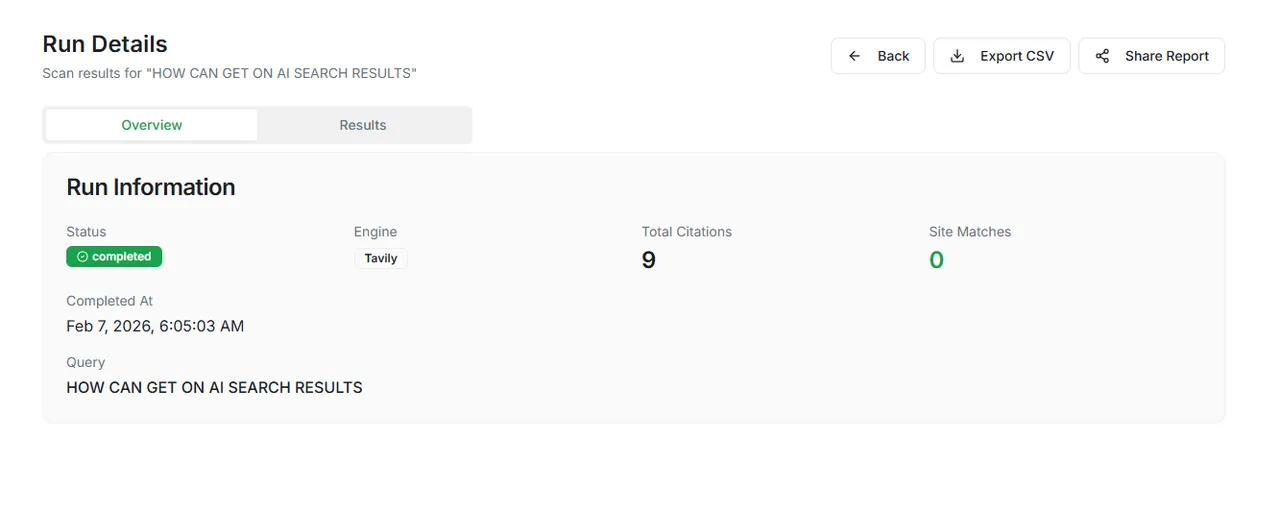
Run details Per-check comparison
CiteWorth run details screen showing per-check results, linked evidence and re-test actions.

01

Implementation state

Confirm the intended change is present on the page, and record that it was.

02

Site evidence re-run

Re-run the relevant technical, crawl, performance or trust check and see the new state.

03

AI evidence afterwards

Observe what happens to citations, Share of Voice and competitor visibility in later runs.

04

Retained history

Keep the before, the work and the after as an evidence trail you can revisit.

What this does and does not prove

CiteWorth proves what changed and shows the evidence observed afterwards.

It does not claim a fix caused a citation, a ranking or a revenue outcome. Answer engines are external systems, and CiteWorth reports observation and change, not causation.

07 / Report
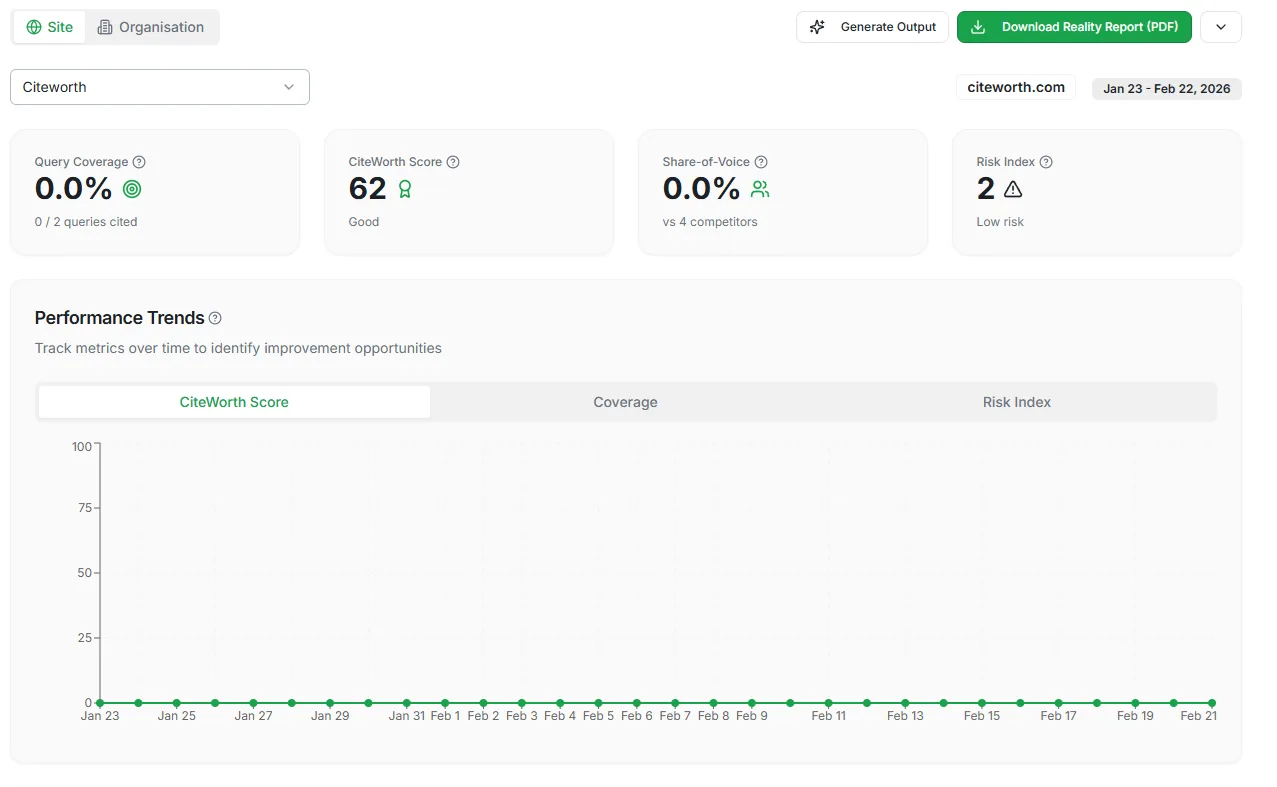
Report Centre Run completed
CiteWorth report performance result showing outcome summaries, per-page checks and report outputs.

Turn the whole loop into something someone else can read.

Report Centre takes the evidence, the work and the verification that followed, and turns it into reporting that makes sense to people who were not in the platform.

Business owners
What was found, what was done, and what has been observed since.
Agency teams
A defensible record of delivery per site, without rebuilding it by hand.
Clients
Clear reporting drawn from retained evidence rather than a screenshot.
Stakeholders
The state of things now, and how it compares with before.
Explore Report Centre

Then the loop starts again, with the previous run as your baseline.

Before you start

The questions people ask at this point. Full FAQ →

Do I have to complete every stage?

No. The journey describes how the stages connect, not a compulsory sequence. Plenty of teams start by looking at evidence and only move into work once something is clearly worth doing.

How is this different from checking an AI assistant manually?

A manual check is one-off and unrecorded. CiteWorth queries the surfaces it supports, timestamps the result, tracks change between runs, and keeps the evidence attached to whatever work it triggered.

Does CiteWorth change my website for me?

No. CiteWorth defines, structures and guides the work, and verifies the result afterwards. Publishing changes stays in your own systems and your own approval process.

What can CiteWorth actually prove?

What was observed, what work was done, what was verified live afterwards, and when. It is an evidence trail for the work — not a guarantee of citations, rankings or revenue.

Start at the evidence. The rest of the loop follows.

Begin with what AI is showing about you today and what your site looks like underneath it. CiteWorth will show you what is worth attention and what to do next.

Want to talk it through first? Talk to us