

Brands that recur
The organisations being named or drawn on in your place, question after question.
Usually a positioning and content question: they are answering something you have not.
Competitors
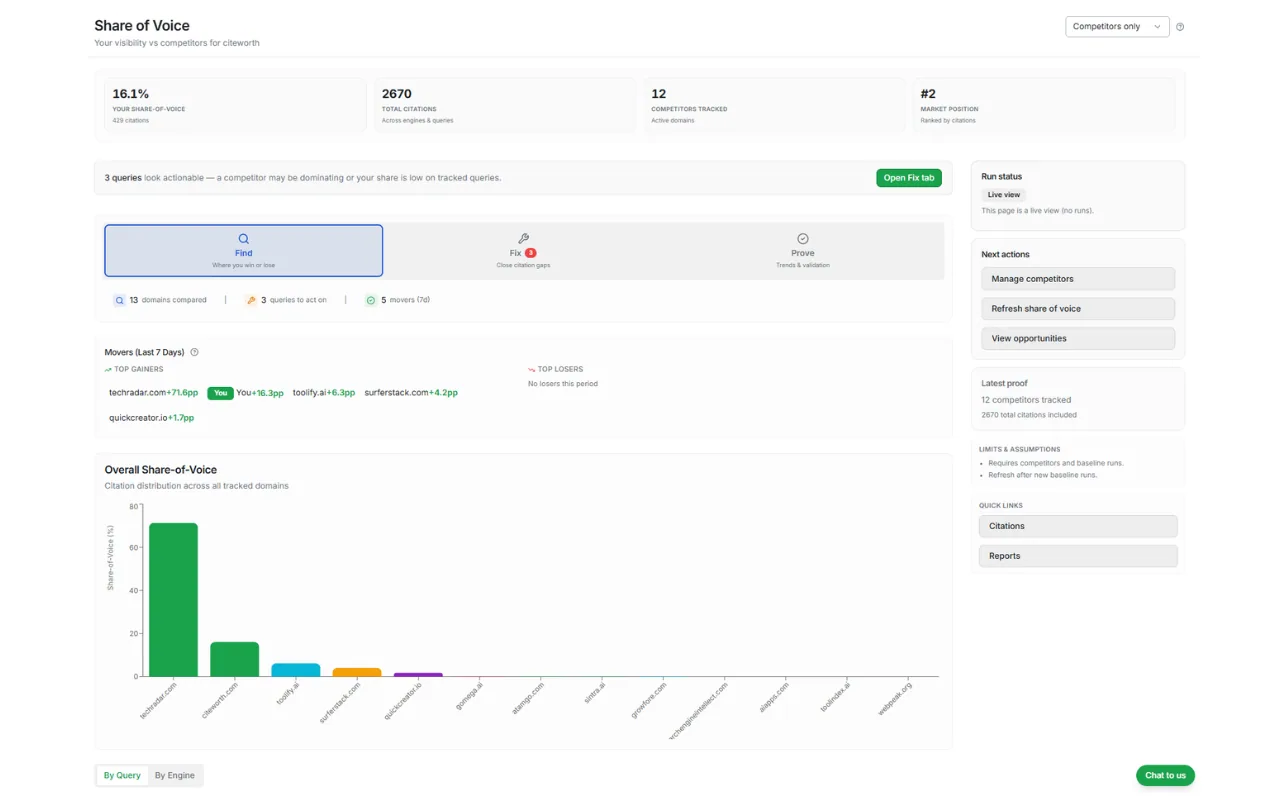
When an answer gets built without you, it gets built from someone. Competitors shows who that keeps being — across the questions you track, over repeated runs, so the pattern is evidence rather than a hunch.
No card required.
Two things recur, not one
Teams tend to think about competitors only as rival companies. Answer engines do not work that way — a directory, a review site or a reference page can hold a question just as firmly as a competitor can.
The organisations being named or drawn on in your place, question after question.
Usually a positioning and content question: they are answering something you have not.
The domains, directories and reference pages an engine keeps returning to for your category.
Often a presence question: the answer is being assembled somewhere you are not represented.
What this is not
This is not a list of companies that resemble yours, generated from an industry taxonomy. It is a record of which domains were observed being drawn on for questions you chose to track. Nothing appears here because it looks like a competitor — it appears because it turned up.
On causation
Recurrence tells you a competitor keeps being selected. It does not tell you why, and answer engines do not publish their reasoning. What to do about it is a judgement made against the rest of your evidence, not a conclusion this page can hand you.
You choose the comparison
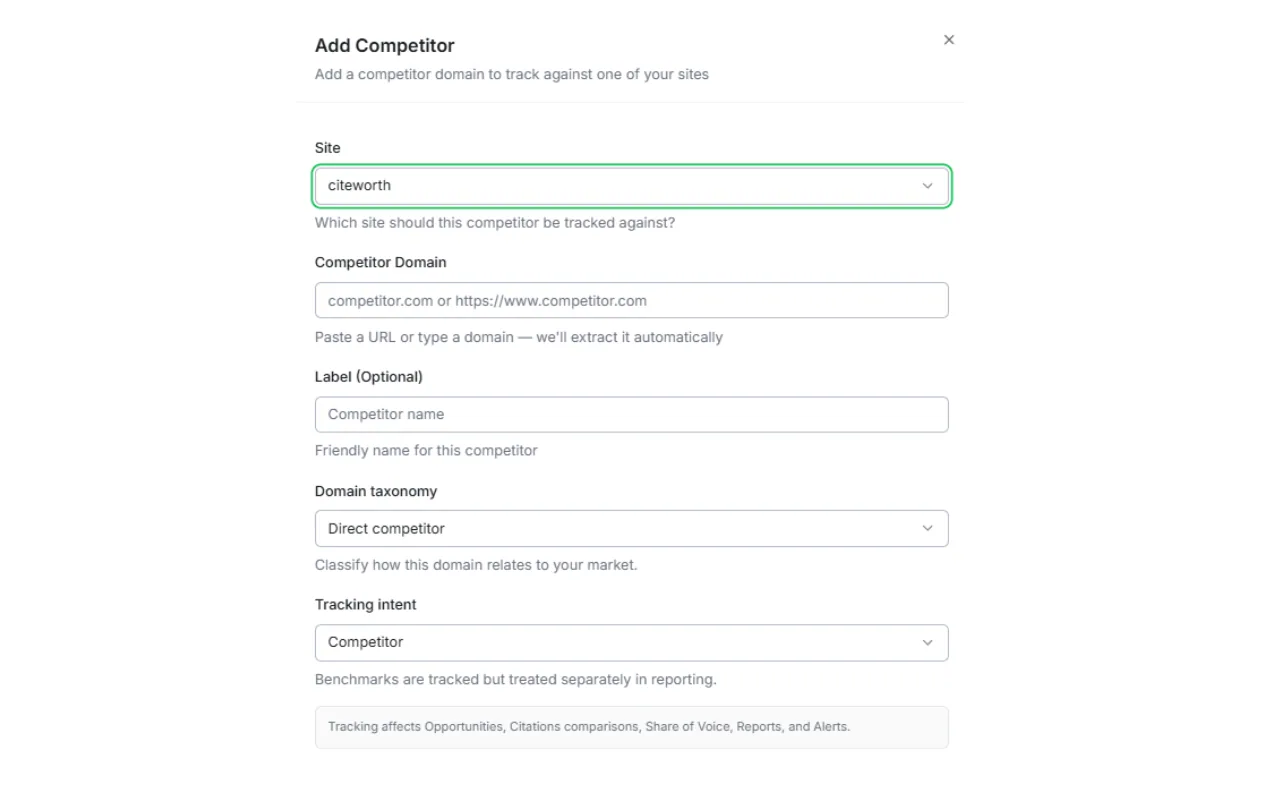
Comparison is only useful against domains that genuinely compete for the same questions. Adding everyone who is vaguely adjacent dilutes the very pattern you are looking for.
Pick real rivals
Domains competing for the same questions, not everyone in the sector.
Keep the set tight
A small, deliberate set makes recurrence obvious instead of diluted.
Revisit it
Who competes for an answer changes, so the set is worth reviewing.
Substitution is one reading of the evidence. It gets useful next to the rest of it.
Track the questions that matter and watch who turns up against them.
Want help picking a competitor set? Talk to us