

Citations & Mentions
See exactly where AI answers reference you.
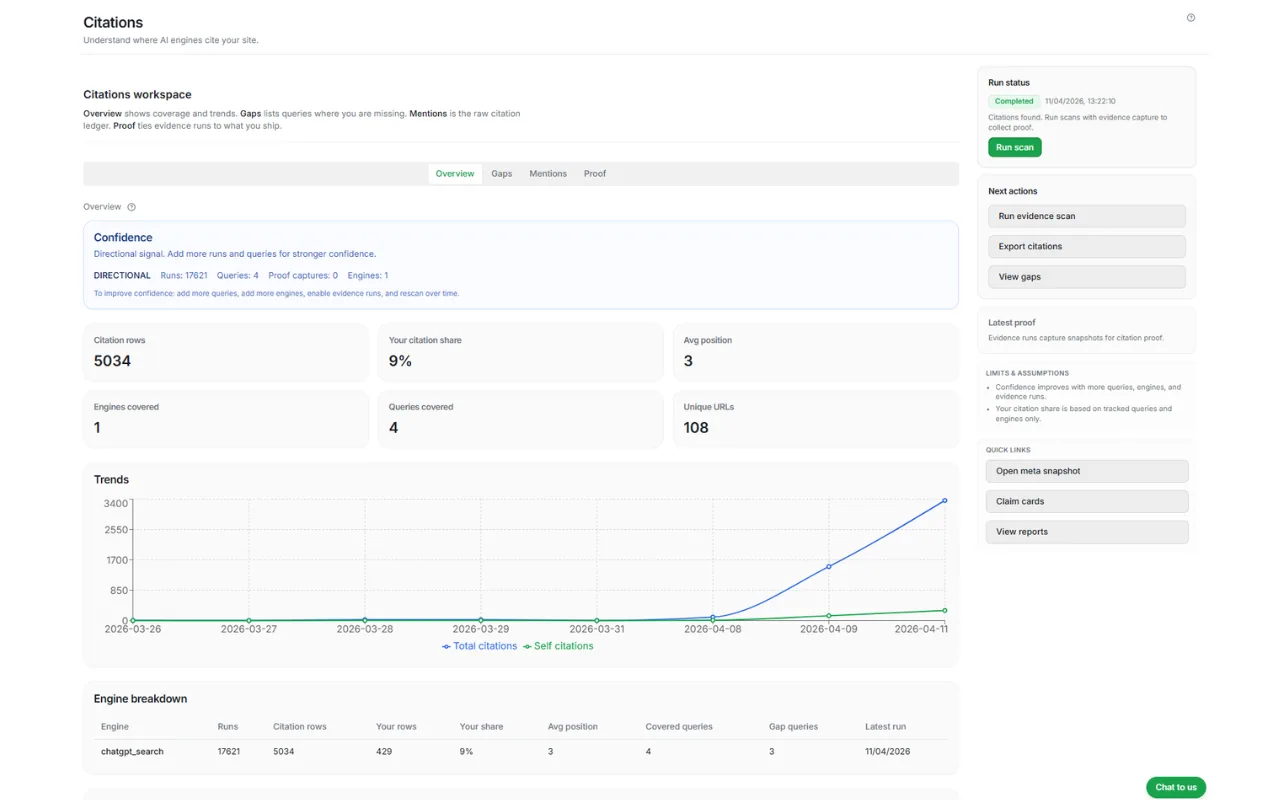
When someone asks an answer engine a question in your category, something gets cited. Citations records what that was — the engine, the question, the moment, and what it pointed to — so you are reading evidence instead of guessing.
No card required.
- Across answer engines
- Question-level evidence
- Kept as history
Read the evidence correctly
A mention and a citation are not the same thing.
The difference matters, because they tell you different things about how an answer engine is treating your organisation. CiteWorth records both and keeps them distinct.
- Mention Your name appears in the answer
- The engine has written about you in its response. It knows you exist and considers you relevant enough to name — but the reader is not being sent anywhere.
- Citation Your page is the source
- The engine has attributed part of its answer to a URL you own. Your content is doing the work behind the response, and the reader has a route back to you.
Not rank tracking. There is no single ordered list of results to occupy — the question is whether an answer draws on you at all, and what it drew on.
What each result holds
Every reference is recorded as evidence, not a number.
A count on its own cannot be acted on. Each result keeps the surrounding detail so you can tell a strong reference from an incidental one.
- Engine Which answer engine produced the response. Engines behave differently and are not directly comparable.
- Question The Prompt that triggered it, so you can see which intents you show up for.
- Reference What the answer actually pointed to, so you know which page is carrying the result.
- Observed When it was seen. Answers move, so the timing is part of the evidence.
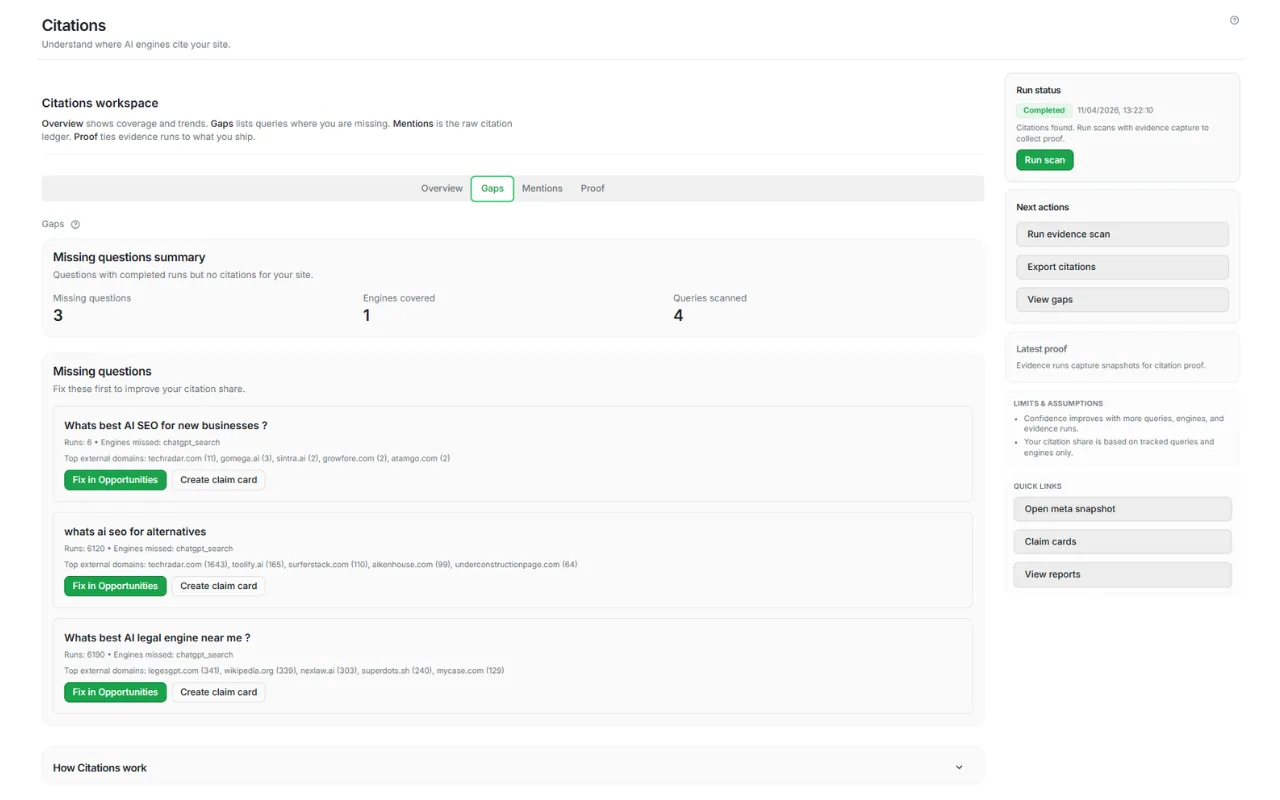
Absence is evidence too
No citation for a question does not mean an engine cannot reach your site. It means it did not draw on you for that answer, on that occasion. Repeated absence across a question you should own is the signal worth following — and that pattern is what reaches Opportunities.
Over time
One observation is a snapshot. A history is something you can reason about.
Answer engines are not stable. A single check tells you very little on its own, so results are retained and re-observed, letting you see which references persist, which fade, and which questions you have never appeared for.
-
What holds
References that keep appearing across repeat observations, rather than one lucky answer.
-
What moved
Where the picture changed after work went live, shown as observation, not attribution.
-
What is missing
Questions in your category where you consistently do not appear at all.
What Citations connects to
Citation evidence is most useful next to the other evidence that explains it.
-
Widens it
Share of Voice
How much of the answer space you hold versus everyone else.
-
Explains it
Competitors
Who is being referenced when you are not.
-
Summarises it
AI Health
The current state of your AI visibility evidence in one view.
-
Acts on it
Opportunities
The patterns from this evidence that justify attention.
Find out what AI answers are already saying about you.
Run your first pass and see which questions reference you, and which ones do not.
Want help choosing what to track? Talk to us